

When it comes to climbing, carabiners are a key component. There are a ton to choose from with different functions and purposes. There are so many that it can almost be a bit overwhelming, especially if you are completely new to it. That's why we have created this guide as a little crash course in what different types of carabiners there are and what their purpose is.
Areas of application
Arborists primarily use carabiners to attach themselves to ropes, create anchor points, connect various work tools, and attach tools. Carabiners used by arborists should comply with EN 363 standard for personal fall protection equipment - Connecting devices . They are usually made of aluminum as it is a lightweight material that is well suited for climbing, but more robust steel versions are also available. Carabiners come in different shapes/profiles and with different locking mechanisms. Each type of carabiner has its own unique properties and uses. The choice depends on the tasks and preferences of the arborist or climber, as well as the specific requirements for safety and functionality.
Different types of locking mechanisms
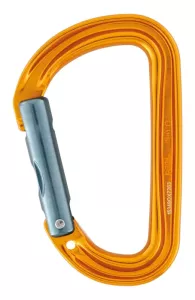
Automatic locking/snap carabiners:
Opens easily by pressure and closes automatically as soon as the pressure disappears. Not allowed to be used to tie people down as they have no extra safety function and are easily opened unintentionally. Occurs mainly for attaching equipment to harnesses or why not as a key ring.
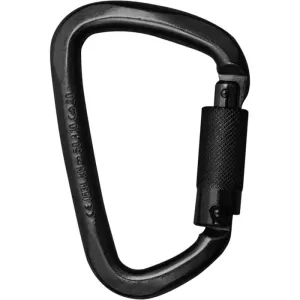
Triple locking carabiners
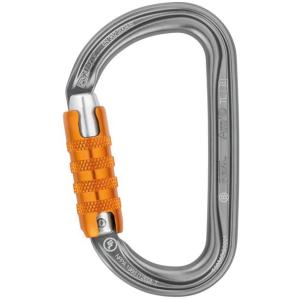
There are different types of three-step locking carabiners, all of which require three operations to open the carabiner. The most common is the one you see in the picture below and to open you must first push down on the locking housing. Then turn the locking housing and finally push it in. Provides advanced security and is often used to secure people in various devices.
Snaphook carabiners
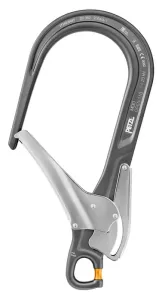
A two-way carabiner that can be quickly opened and closed with one hand. Often has large openings to fit metal structures and railings. Often found when working with scaffolding and lanyards/safety lines.
Screw carabiner
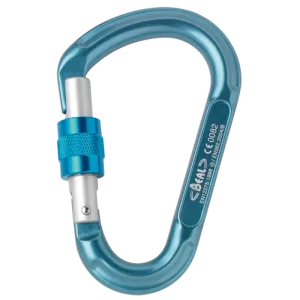
These are locked by a screw mechanism. They take longer to close and are therefore often used when the carabiner does not need to be constantly opened and closed.
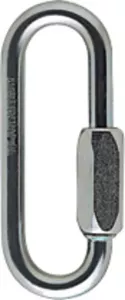
Quick link
Closes with a wrench and becomes a semi-permanent anchor ring. Used primarily for anchoring.
The purpose of the different shapes of carabiners
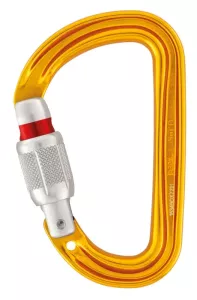
D-shaped carabiners
The D shape is used to distribute the weight evenly and maintain a more secure positioning. Since the D shape is asymmetrical, you can focus the weight where the carabiner is strongest while keeping it better in place. Often used in combination with descenders or anchor points
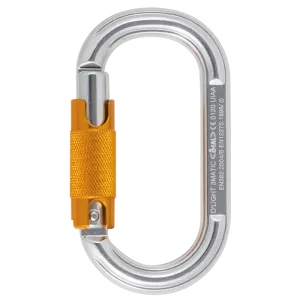
Oval carabiners
Symmetrical carabiners that can be implemented in many different ways. Used and combined with various tools such as mechanical prusiks and connectors.
HMS/pear carbine
This variant is specially designed to fit the Munter hitch knot. The wide side provides space for the knot while the narrower part provides stability for the safety line.
Tool carabiners
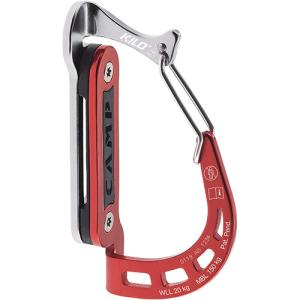
Special carabiners with a bracket on the back to attach it to a climbing harness or belt. The suspension for the harness is located on the back of the carabiner and ensures that the carabiner remains in its position. This way, for example, the chainsaw can be easily and safely hooked in when it is not needed.
Specially designed carabiners
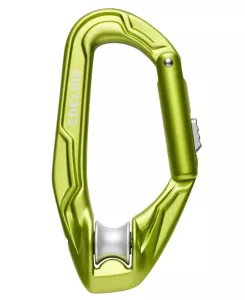
This variant can look different but often has a swivel, eyelet, or pulley. This is to be able to pull ropes and the like without friction. Often used to build rope bridges, safety lines and diversions.
Choosing the right carabiner is crucial to an arborist's safety. Regardless of which variant you choose, it's important to invest in high-quality equipment to ensure a safe day working among the branches.